Signed in as:
filler@godaddy.com
Explore the top tourist attractions in Thechipolariver.com. From historical landmarks to modern-day wonders, there's something for everyone.
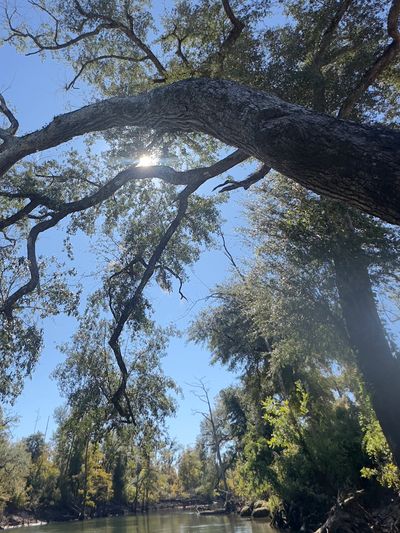
Get active and enjoy the great outdoors with Thechipolariver.com. The Chipola River has a rich history of human inhabitants dating over 10,000 years. The first peoples to arrive in Florida were Hunter gathers, descendants of the original Hunter gathers that crossed the land bridge connecting modern day Alaska to modern day Russia. Hunter gathers were nomadic clans that hunted large mega fauna including mastodons for food. The slow and very powerful mastodons were hunted into extinction over 10,000 years ago. The hunting process involved tracking them for days and wounding the beast with a weapon named an Atlatl. This weapon was a pointed stone tipped 9 foot long dart that was used in conjunction with a handheld lever allowing the projectile to reach speeds in excess of 100mph and hit a target 1000 yards away. Eventually the mastadons would basically overheat themselves beacause the can not sweat like humans and a lack of water to hydrate themselves due to being pursued. Humans are the only species to self cool by releasing sweat though our skin pores allowing us to regulate our core body temperature. All land mammels besides humans cool themselves by releasing heat and intaking cooler air through breathing. The hunters followed the mastodons across what is now the northern United States from the Pacific Ocean to the Atlantic Ocean then to the shores of The Gulf of America. This coincides with the begining of the Archaic Period dating 10,000-2,500 year ago. Once all of the large game, such as mastodon, were hunted into extinction, the clans no longer traveled the land in pursuit of food. They adapted by planting and tending to crops and hunting smaller game such as deer, rabbit and fish as their source of sustenance. The Chipola River tells their story by the stone tools that are commonly spotted on the river banks. These artifacts can range from 12” stone projectile points to hand axes, stone effigies and the more well known arrowheads. The long projectile points are the oldest. They were used to hunt large game during a time when the bow and arrow technology was not known to the masses on this continent. When the mastodons were hunted to extinction, the nomads adapted by making smaller stone points such as arrowheads, snares and fishing nets. These finds tell us the chronology of how these ancient travelers adapted and became the Native Americans we know and respect today. They no longer were required to roam the continent following herds of the sources of their protein sources. During the Archaic Period, their lifestyles drastically changed as they became the first human settlers in Florida. Their cultures thrived because of the abundance of seafood and other woodland game Florida is known for today. Fast forward to the era known as post Columbian. This period refers to the late 16th and early 17th century when European explorers made it to the shore of the new world and interacted with the natives of what is now known as The United State of America. This epoch is also documented by the broken European glazed ceramic pieces that are often found near the latest and last of the free tribal natives settlements. This evidence suggest that the Europeans traded with the New World natives. It was difficult for the two cultures to coexist. Not only did they speak different languages but they had totally different lifestyles and agendas. When Hernando De Soto landed in Florida in the 1530s he intended to map as much of them newly discovered continent as possible. De Soto and his troops marched from the Tampa area into South Carolina and then headed west to the shores of the Mississippi river. De Soto and his men were constantly battling with the natives. The Native Americans vastly outnumbered the Spanish explorers, however the vast number of natives were no match for the technology that the Europeans brought with them in a form of firearms. Footnote: De Soto brought domesticated pigs with them on the 1535 exploration. Before De Soto, there were no feral hogs on this continent. De Soto is directly responsible for introducing the wild boar into our country. The remains of these swine have been found near the middens near campsites of ancient florida Natives on the Chipola’s banks. This river is rich in history and is still the least developed area in Florida.
Stay up-to-date on the latest events happening in Thechipolariver.com. From concerts to festivals, there's always something fun going on.
Savor the flavors of Thechipolariver.com with its wide variety of restaurants and bars. From fine dining to casual eats, there's something to suit every taste.
Find the perfect place to stay in Thechipolariver.com. From luxury hotels to cozy bed and breakfasts, there's an option for every budget and preference.
Discover the best ways to get around Thechipolariver.com, whether you're traveling by car, bus, train, or plane. We've got you covered.

We believe in creating meaningful experiences that inspire and connect. Let us help you bring your vision to life.
We deliver exceptional results in everything we do, ensuring your satisfaction at every step.
Our experienced team brings skill and passion to every project, no matter the size.
Proven outcomes that speak for themselves and make a meaningful difference for your business.